Our Story
About Piedmont
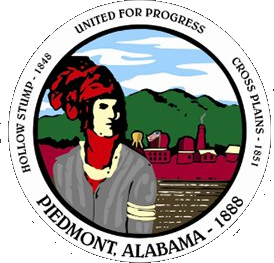
From a hollow stump at a crossroads of Indian trails to a city at the foot of the mountains, Piedmont has carried five names across nearly two centuries.
Piedmont sits in the Appalachian foothills of northeast Alabama, where the land begins to rise toward the mountains.
The name is Latin for "foot of the hills," chosen in 1888 because the setting recalled the Piedmont Plateau of North Carolina. But long before it was Piedmont, this was a crossroads: Cherokee and Creek Indian trails met here and became two post roads, and a hollow sycamore stump served as the first "post office" for settlers and Native Americans alike.
The history below was researched and written by the Piedmont Historical Society.

The City Today
Piedmont at a Glance
Location & Community
Living in Piedmont
Where We Are
Piedmont sits at the foot of the Appalachian Mountains in northeast Alabama, in the northern corner of Calhoun County. The Chief Ladiga Trail and Terrapin Creek run through town, and the surrounding foothills draw cyclists, paddlers, and hikers year-round.
About 25 minutes from Anniston, an hour from Gadsden, and roughly an hour and a half from both Atlanta and Birmingham.
Schools
Piedmont City Schools is one of the top-rated public school systems in Alabama, with an A on the state report card, strong proficiency scores, and a pioneering one-to-one digital learning program.
Healthcare
Cherokee Medical Center (Atrium Health Floyd) provides 24/7 emergency, surgical, and specialty care right in Piedmont. Piedmont Health Care Center, a 5-star skilled nursing and rehab facility owned by the city, sits at the foot of Dugger Mountain.
Parks & Recreation
The city maintains several parks plus the 33-mile Chief Ladiga Trail, Alabama’s first rails-to-trails project, connecting Piedmont to the Georgia state line and the Silver Comet Trail beyond.
Education
Piedmont City Schools
For a small city, Piedmont runs one of Alabama’s best public school systems, and it’s a point of real pride for the community.
On the most recent Alabama state report card, Piedmont City Schools earned an A and tied for the second-highest overall score in the state, a 97, behind only Mountain Brook and level with Vestavia Hills, and one of just eleven districts in Alabama to earn all A’s. The district ranks among the top of Alabama’s 145 school systems, with math and reading proficiency well above the state average and a perfect score on the state’s academic growth measure.
Piedmont was an early pioneer of digital, one-to-one learning, which is widely credited with helping students keep making academic progress through the pandemic. The system also has one of the highest shares of National Board Certified teachers in the state and the nation.
Piedmont Elementary
A 5-star, top-ranked Alabama elementary school whose principal was named the state’s National Distinguished Principal.
Piedmont Middle
Continues the district’s one-to-one digital learning, carrying strong proficiency through the middle grades.
Piedmont High
A 5-star high school with a ~90% graduation rate, strong college-and-career readiness, and dual-enrollment and career-tech pathways.
How the City Works
City Government & Services
Piedmont operates under a Mayor–Council form of government. The Mayor and a seven-member City Council, elected by district, set policy and direct city services. Council meetings are open to the public.
A Town of Many Names
How Piedmont Got Its Name
A hollow sycamore stump at the corner of North Center Avenue and East Ladiga Street served as the unofficial post office, where settlers and American Indians left and collected mail at the crossroads of two post roads.
The growing community chose "Cross Plains," for the many trails that crossed here, over the name Griffin's Creek. The Cross Plains Post Office opened September 22, 1851, with Major Jacob Forney Dailey as first postmaster.
For a few weeks, a railroad settlement just west of town was named "Patona" after William Paton, a director of the Selma, Rome & Dalton Railroad. The name didn't last.
Cross Plains was incorporated March 10, 1871, and reincorporated in 1882. By 1879 it had 200 citizens, eight general stores, two churches, two schools, and a railroad.
William Iredell Hood proposed "Piedmont" (Latin for "foot of the hills") because the area reminded him of the Piedmont Plateau of North Carolina. The Post Office adopted it July 30, 1888, and the city was incorporated December 12, 1888.
In Depth
The Piedmont Story
History researched and provided by the Piedmont Historical Society, Inc.

The Crossroads & the Hollow Stump
In the 1840s, Cherokee and Creek Indian trails converged here and gave way to two post roads: the Rome & Wetumpka Road (now Ladiga Street) and the Centre & Choccoloco Road (now Center Avenue). A hollow sycamore stump at their corner served as the area's first "post office."
In 1844, James William Price and his family arrived from Tennessee among the first white settlers, running an inn and stables at the crossroads. In February 1848, Jacob Forney Dailey settled in a log cabin and opened the first general store. He would go on to become the area's first mayor and help incorporate Piedmont in 1888.
The Railroad & the Cross Plains Years
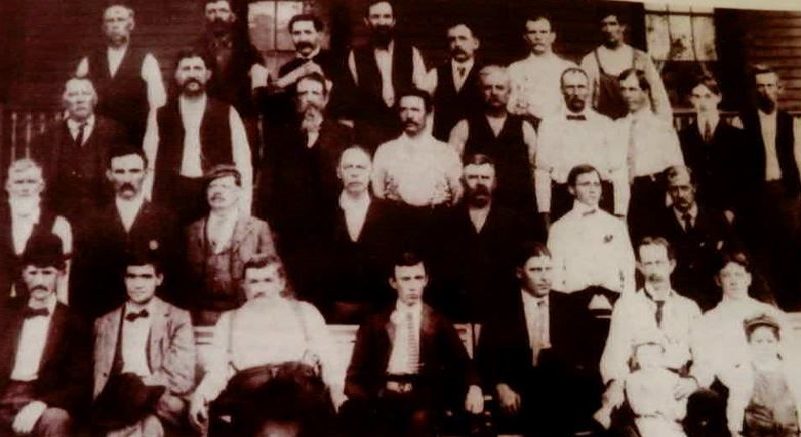
The first train arrived June 20, 1868, when the Selma, Rome & Dalton Railroad reached Cross Plains and built a Victorian wooden depot. Incorporated in 1871, the town grew fast. By 1879 it had 200 citizens, eight general stores, two churches, two schools, and the railroad. A second line, the East & West Railroad, arrived in 1883.
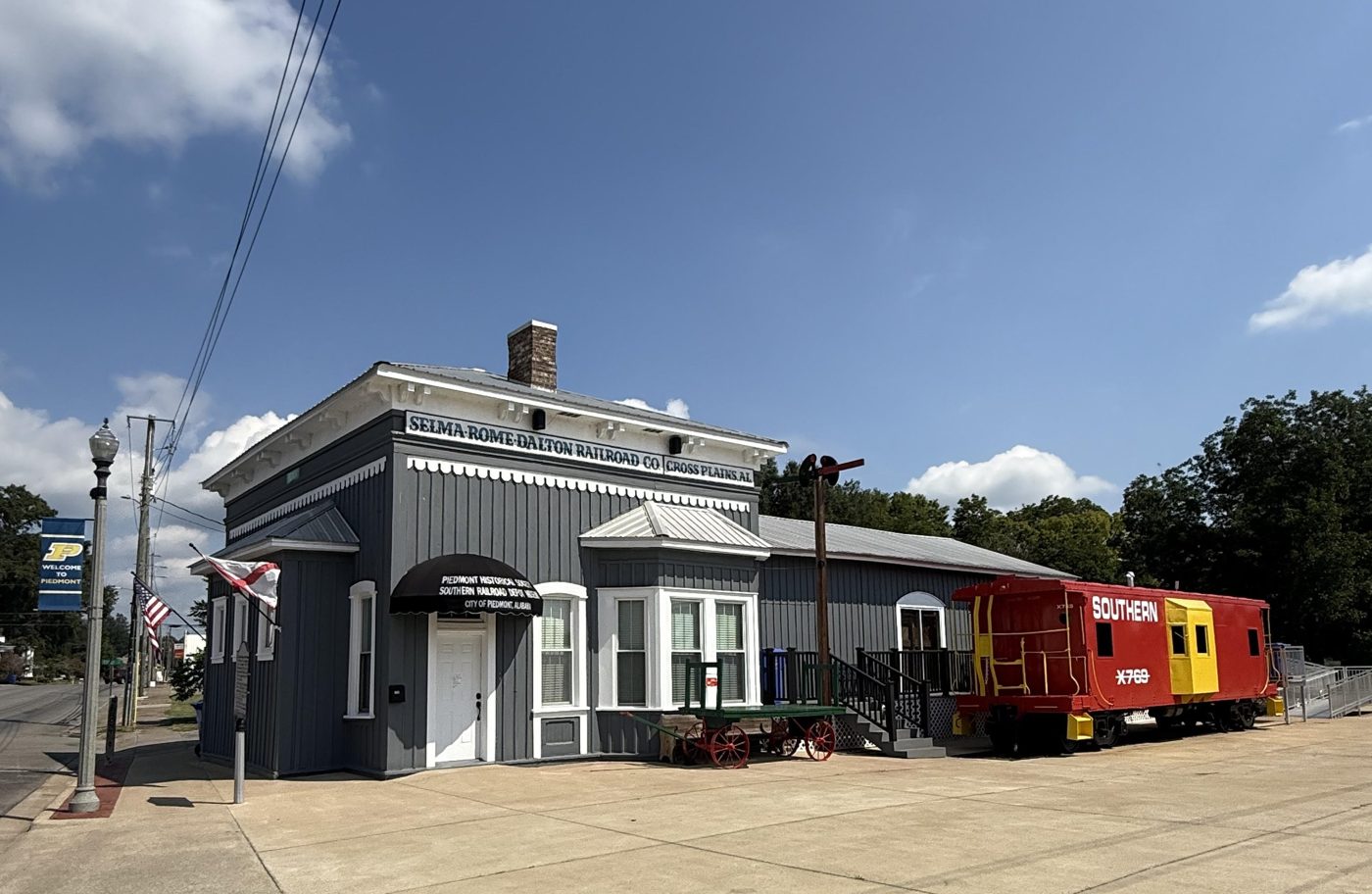
That original Selma-Rome-Dalton depot still stands today as the home of the Piedmont Historical Society museum. The railroad that built the town now tells its story.
Becoming Piedmont, 1888
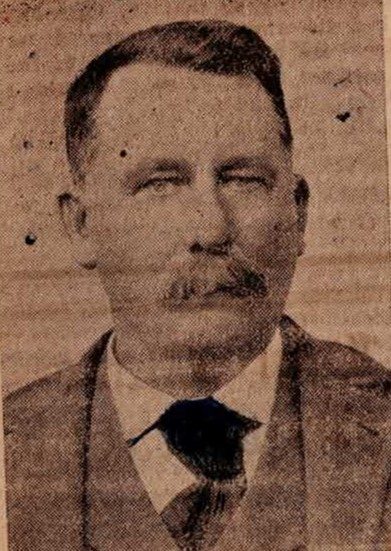
The name "Piedmont" was promoted by editors of The Saturday Post in 1888 and credited to William Iredell Hood, son of Mayor Joseph Nathaniel Hood. The Postal Department made it official on July 30, 1888, and the Alabama General Assembly incorporated the City of Piedmont on December 12, 1888.
At incorporation, the area was home to roughly 1,000 white settlers and 3,000 Cherokee and Creek people. The newspaper itself became The Piedmont Post that November.
The 1890s Boom & the Mills
The economic boom of the 1890s brought five churches, hotels, dozens of stores, and electric street lamps as early as 1891. The operator blew a whistle at 10:45 pm so residents could light their oil lamps before the power cut at 11:00. The area even drew Northern travelers to grand mountain resorts; the nearby Signal Hotel hosted author Rudyard Kipling and General William T. Sherman.
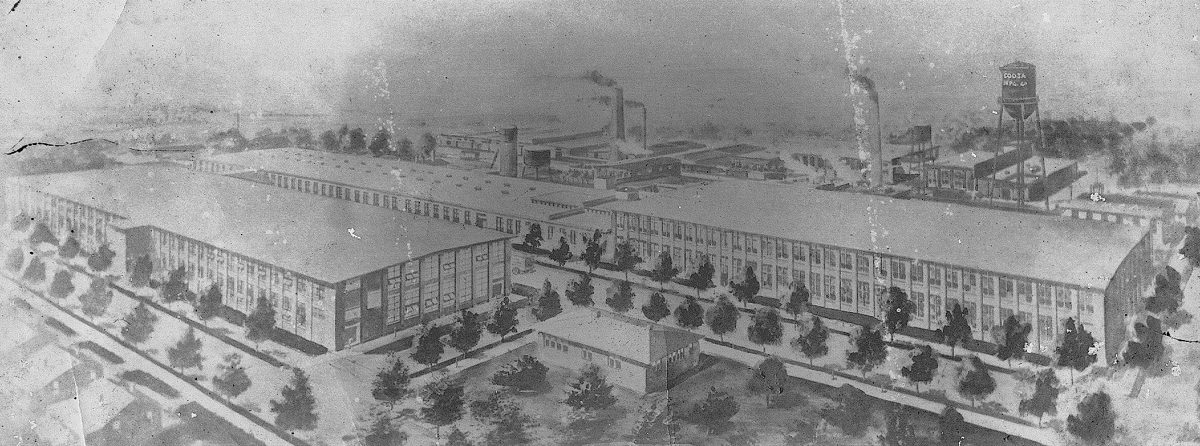
The Coosa Manufacturing Company, built in 1892, became Standard Coosa Thatcher in 1922 and was a major employer until 1995, when it closed following NAFTA, a loss of more than 1,100 jobs.

Schools, Industry & Today
Education grew from early private academies into the Piedmont Public School in 1900, today the nationally recognized Piedmont City School System serving over 1,130 students. Piedmont's economy diversified from cotton and farming into textiles, poultry, manufacturing, and healthcare.
In the 21st century, Piedmont built up its healthcare community and embraced outdoor recreation. When the railroad pulled out and CSX removed the tracks in 1986, local governments, led by Mayor James William "Billy" Bennett, transformed the corridor into the Chief Ladiga Trail, named for the Muscogee (Creek) leader who signed the 1832 Treaty of Cusseta. Today it runs through Terrapin Creek and the Appalachian foothills as Alabama's first rails-to-trails project.
From Piedmont
Notable Residents
Rick Bragg
Pulitzer Prize–winning author and journalist, born in Piedmont, known for his memoirs of life in the rural South.
Jimmy Dew
Piedmont native and Bethune High graduate who starred at Alabama State and was drafted by the Detroit Pistons in 1958. Inducted into the Calhoun County Sports Hall of Fame.
Jacob Forney Dailey
Early settler who opened the first general store in 1848, served as first mayor, and helped incorporate Piedmont in 1888.
William Iredell Hood
Credited with proposing the name "Piedmont" in 1888, inspired by the Piedmont Plateau of North Carolina.
Step Into History
Visit the Piedmont Museum
The Piedmont Historical Society preserves the city's story in the restored Southern Railroad depot, the original Selma-Rome-Dalton Railroad station from the Cross Plains era, alongside a classic red caboose. Explore artifacts, archival photographs, and more of Piedmont's history on the museum's website.
Explore the Museum Site